。線框讓檢查線穿過時仍然清晰%20--%3e%3cpath%20d='M84%2050%2067%2079.44%2033%2079.44%2016%2050%2033%2020.56%2067%2020.56Z'%20fill='none'%20stroke='%2316181A'%20stroke-width='9'%20stroke-linejoin='miter'/%3e%3c!--%20檢查線的留白暈圈:跨過任何線條時都保持可辨,單色版也成立%20--%3e%3crect%20x='41'%20y='30'%20width='18'%20height='64'%20fill='%23F2F2F0'/%3e%3c!--%20扭力檢查線:從螺帽中心畫出,跨過邊緣落到底座%20--%3e%3crect%20x='44.5'%20y='33'%20width='11'%20height='59'%20fill='%23C8102E'/%3e%3c/svg%3e) SCREWKING
SCREWKING
Type-Cutting Screws
A slot at the end — or along the flank — forms a genuine cutting edge. Compared with a self-tapping thread it cuts with less resistance and lower driving torque, which suits castings, thicker metal and rigid plastics where an ordinary self-tapper snaps or bursts the hole.
Specification options
| Volume range | M1.0 – M5.0 |
|---|---|
| Maximum size | M16 |
| Standards | DIN 7513 · DIN 7516 · ISO 1478 |
| Materials | see Materials |
| Finishes | see Finishes |
| Minimum order | From 10,000 pcs, depending on the part |
Head styles
%20Pan%20Head'%3e%3ctitle%3e圓頭(盤頭)%20Pan%20Head%3c/title%3e%3cg%20fill='none'%20stroke='%2316181A'%20stroke-width='2.4'%20stroke-linejoin='miter'%20stroke-linecap='butt'%3e%3cpath%20d='M%2034%2046%20L%2034%2037%20Q%2034%2026%2060%2026%20Q%2086%2026%2086%2037%20L%2086%2046%20Z'%20/%3e%3cpath%20d='M%2049%2046%20L%2052%2049.5%20L%2049%2053%20L%2052%2056.5%20L%2049%2060%20L%2052%2063.5%20L%2049%2067%20L%2052%2070.5%20L%2049%2074%20L%2052%2077.5%20L%2049%2081%20L%2052%2084.5%20L%2049%2088%20L%2052%2091.5%20L%2049%2095%20L%2052%2098.5%20L%2049%20102%20L%2052%20105.5%20L%2049%20109%20L%2052%20112.5%20L%2049%20116%20L%2052%20119.5%20L%2049%20123'%20/%3e%3cpath%20d='M%2071%2046%20L%2068%2049.5%20L%2071%2053%20L%2068%2056.5%20L%2071%2060%20L%2068%2063.5%20L%2071%2067%20L%2068%2070.5%20L%2071%2074%20L%2068%2077.5%20L%2071%2081%20L%2068%2084.5%20L%2071%2088%20L%2068%2091.5%20L%2071%2095%20L%2068%2098.5%20L%2071%20102%20L%2068%20105.5%20L%2071%20109%20L%2068%20112.5%20L%2071%20116%20L%2068%20119.5%20L%2071%20123'%20/%3e%3cpath%20d='M%2049%20123%20L%2071%20123'%20/%3e%3c/g%3e%3c/svg%3e)
%20Countersunk%20/%20Flat%20Head'%3e%3ctitle%3e皿頭(平頭)%20Countersunk%20/%20Flat%20Head%3c/title%3e%3cg%20fill='none'%20stroke='%2316181A'%20stroke-width='2.4'%20stroke-linejoin='miter'%20stroke-linecap='butt'%3e%3cpath%20d='M%2030%2026%20L%2090%2026%20L%2071%2046%20L%2049%2046%20Z'%20/%3e%3cpath%20d='M%2049%2046%20L%2052%2049.5%20L%2049%2053%20L%2052%2056.5%20L%2049%2060%20L%2052%2063.5%20L%2049%2067%20L%2052%2070.5%20L%2049%2074%20L%2052%2077.5%20L%2049%2081%20L%2052%2084.5%20L%2049%2088%20L%2052%2091.5%20L%2049%2095%20L%2052%2098.5%20L%2049%20102%20L%2052%20105.5%20L%2049%20109%20L%2052%20112.5%20L%2049%20116%20L%2052%20119.5%20L%2049%20123'%20/%3e%3cpath%20d='M%2071%2046%20L%2068%2049.5%20L%2071%2053%20L%2068%2056.5%20L%2071%2060%20L%2068%2063.5%20L%2071%2067%20L%2068%2070.5%20L%2071%2074%20L%2068%2077.5%20L%2071%2081%20L%2068%2084.5%20L%2071%2088%20L%2068%2091.5%20L%2071%2095%20L%2068%2098.5%20L%2071%20102%20L%2068%20105.5%20L%2071%20109%20L%2068%20112.5%20L%2071%20116%20L%2068%20119.5%20L%2071%20123'%20/%3e%3cpath%20d='M%2049%20123%20L%2071%20123'%20/%3e%3c/g%3e%3c/svg%3e)


Drive types


Choosing the thread
-
Type Fmachine screw form with slots
Machine screw thread form, so it interchanges with standard nuts. Use where the part may later be converted to a standard fastener.
-
Type D / T
Different slot geometry, different swarf path and cutting resistance. Select on material and hole depth.
Where it most often goes wrong
Each of these causes scrapped lots or rework on the floor. None of them is theoretical.
Repeated assembly. The thread it cut fits that screw. Removed and refitted, the cutting edge cuts again and the hole grows each time. Anywhere that comes apart repeatedly wants a nut or a tapped hole.
Blind hole with no chip reservoir. Cutting produces swarf. With nowhere for it to go, the chips jack the screw — torque rises while the part is not seated.
Blunt edges going unnoticed. As the cutting edge dulls, torque rises. An automated line watching only a torque ceiling can read “blunt” as “tight”.
How length is measured
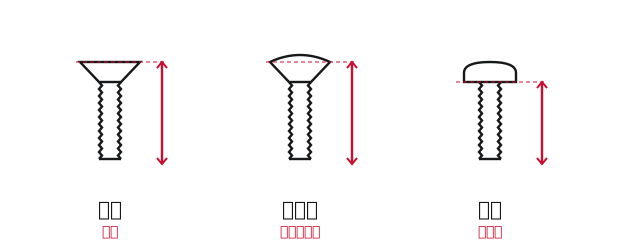
One rule covers it: if the head sinks into the work, measure overall; if it stays on the surface, measure under the head.
| Head style | Datum | Why |
|---|---|---|
| Countersunk (flat) | Overall length | The head sits flush in the countersink, so it counts |
| Oval (raised countersunk) | Overall to the head diameter | The cone sinks, the dome stays proud; measure to where they meet |
| Pan / round | Under head | The head stays entirely on the surface |
| Button | Under head | Same |
| Hex / hex washer | Under head | Same |
| Socket head cap | Under head | Same |
Full explanation → Where the standards stop at this size → Tolerance stack-up and the screw →
Enquiries
Type-Cutting Screws come in a lot of combinations. Tell us the item, size, material, finish, annual usage and application, and we will come back on feasibility and lead time. A drawing or a sample is fastest — quoting against the real part saves a great deal of guessing.
Volume range M1.0 – M5.0, standard fasteners up to M16. Minimum order From 10,000 pcs, depending on the part.