。線框讓檢查線穿過時仍然清晰%20--%3e%3cpath%20d='M84%2050%2067%2079.44%2033%2079.44%2016%2050%2033%2020.56%2067%2020.56Z'%20fill='none'%20stroke='%2316181A'%20stroke-width='9'%20stroke-linejoin='miter'/%3e%3c!--%20檢查線的留白暈圈:跨過任何線條時都保持可辨,單色版也成立%20--%3e%3crect%20x='41'%20y='30'%20width='18'%20height='64'%20fill='%23F2F2F0'/%3e%3c!--%20扭力檢查線:從螺帽中心畫出,跨過邊緣落到底座%20--%3e%3crect%20x='44.5'%20y='33'%20width='11'%20height='59'%20fill='%23C8102E'/%3e%3c/svg%3e) SCREWKING
SCREWKING
Self-Tapping Screws
A self-tapping screw cuts its thread and produces swarf. The hole is drilled first but not tapped. Removing the tapping operation is why this is the common choice for sheet metal and plastics assembly.
Specification options
| Volume range | M1.0 – M5.0 |
|---|---|
| Maximum size | M16 |
| Standards | DIN 7971 · DIN 7972 · DIN 7981 · DIN 7982 · ISO 1478 · ISO 7049 · JIS B 1122 |
| Materials | see Materials |
| Finishes | see Finishes |
| Minimum order | From 10,000 pcs, depending on the part |
Head styles
%20Pan%20Head'%3e%3ctitle%3e圓頭(盤頭)%20Pan%20Head%3c/title%3e%3cg%20fill='none'%20stroke='%2316181A'%20stroke-width='2.4'%20stroke-linejoin='miter'%20stroke-linecap='butt'%3e%3cpath%20d='M%2034%2046%20L%2034%2037%20Q%2034%2026%2060%2026%20Q%2086%2026%2086%2037%20L%2086%2046%20Z'%20/%3e%3cpath%20d='M%2049%2046%20L%2052%2049.5%20L%2049%2053%20L%2052%2056.5%20L%2049%2060%20L%2052%2063.5%20L%2049%2067%20L%2052%2070.5%20L%2049%2074%20L%2052%2077.5%20L%2049%2081%20L%2052%2084.5%20L%2049%2088%20L%2052%2091.5%20L%2049%2095%20L%2052%2098.5%20L%2049%20102%20L%2052%20105.5%20L%2049%20109%20L%2052%20112.5%20L%2049%20116%20L%2052%20119.5%20L%2049%20123'%20/%3e%3cpath%20d='M%2071%2046%20L%2068%2049.5%20L%2071%2053%20L%2068%2056.5%20L%2071%2060%20L%2068%2063.5%20L%2071%2067%20L%2068%2070.5%20L%2071%2074%20L%2068%2077.5%20L%2071%2081%20L%2068%2084.5%20L%2071%2088%20L%2068%2091.5%20L%2071%2095%20L%2068%2098.5%20L%2071%20102%20L%2068%20105.5%20L%2071%20109%20L%2068%20112.5%20L%2071%20116%20L%2068%20119.5%20L%2071%20123'%20/%3e%3cpath%20d='M%2049%20123%20L%2071%20123'%20/%3e%3c/g%3e%3c/svg%3e)
%20Countersunk%20/%20Flat%20Head'%3e%3ctitle%3e皿頭(平頭)%20Countersunk%20/%20Flat%20Head%3c/title%3e%3cg%20fill='none'%20stroke='%2316181A'%20stroke-width='2.4'%20stroke-linejoin='miter'%20stroke-linecap='butt'%3e%3cpath%20d='M%2030%2026%20L%2090%2026%20L%2071%2046%20L%2049%2046%20Z'%20/%3e%3cpath%20d='M%2049%2046%20L%2052%2049.5%20L%2049%2053%20L%2052%2056.5%20L%2049%2060%20L%2052%2063.5%20L%2049%2067%20L%2052%2070.5%20L%2049%2074%20L%2052%2077.5%20L%2049%2081%20L%2052%2084.5%20L%2049%2088%20L%2052%2091.5%20L%2049%2095%20L%2052%2098.5%20L%2049%20102%20L%2052%20105.5%20L%2049%20109%20L%2052%20112.5%20L%2049%20116%20L%2052%20119.5%20L%2049%20123'%20/%3e%3cpath%20d='M%2071%2046%20L%2068%2049.5%20L%2071%2053%20L%2068%2056.5%20L%2071%2060%20L%2068%2063.5%20L%2071%2067%20L%2068%2070.5%20L%2071%2074%20L%2068%2077.5%20L%2071%2081%20L%2068%2084.5%20L%2071%2088%20L%2068%2091.5%20L%2071%2095%20L%2068%2098.5%20L%2071%20102%20L%2068%20105.5%20L%2071%20109%20L%2068%20112.5%20L%2071%20116%20L%2068%20119.5%20L%2071%20123'%20/%3e%3cpath%20d='M%2049%20123%20L%2071%20123'%20/%3e%3c/g%3e%3c/svg%3e)
%20Oval%20/%20Raised%20Countersunk'%3e%3ctitle%3e半皿頭(橢圓頭)%20Oval%20/%20Raised%20Countersunk%3c/title%3e%3cg%20fill='none'%20stroke='%2316181A'%20stroke-width='2.4'%20stroke-linejoin='miter'%20stroke-linecap='butt'%3e%3cpath%20d='M%2030%2026%20Q%2060%2012%2090%2026%20L%2071%2046%20L%2049%2046%20Z'%20/%3e%3cpath%20d='M%2049%2046%20L%2052%2049.5%20L%2049%2053%20L%2052%2056.5%20L%2049%2060%20L%2052%2063.5%20L%2049%2067%20L%2052%2070.5%20L%2049%2074%20L%2052%2077.5%20L%2049%2081%20L%2052%2084.5%20L%2049%2088%20L%2052%2091.5%20L%2049%2095%20L%2052%2098.5%20L%2049%20102%20L%2052%20105.5%20L%2049%20109%20L%2052%20112.5%20L%2049%20116%20L%2052%20119.5%20L%2049%20123'%20/%3e%3cpath%20d='M%2071%2046%20L%2068%2049.5%20L%2071%2053%20L%2068%2056.5%20L%2071%2060%20L%2068%2063.5%20L%2071%2067%20L%2068%2070.5%20L%2071%2074%20L%2068%2077.5%20L%2071%2081%20L%2068%2084.5%20L%2071%2088%20L%2068%2091.5%20L%2071%2095%20L%2068%2098.5%20L%2071%20102%20L%2068%20105.5%20L%2071%20109%20L%2068%20112.5%20L%2071%20116%20L%2068%20119.5%20L%2071%20123'%20/%3e%3cpath%20d='M%2049%20123%20L%2071%20123'%20/%3e%3c/g%3e%3c/svg%3e)


Drive types


Choosing the thread
-
Type AB / Agimlet point
Good lead-in, enters easily; suits thin sheet and softer materials.
-
Type Bblunt point
Thread starts at the end face. Used where material is thicker or the point must not protrude.
-
Type 17slotted point
A slot at the tip forms a cutting edge — better swarf clearance and lower driving torque. Common in timber and thicker sections.
Where it most often goes wrong
Each of these causes scrapped lots or rework on the floor. None of them is theoretical.
Pilot hole wrong. Too small strips the head or snaps the point; too large gives no pull-out strength. The correct diameter depends on material and thickness — it is not one number, and it is the single most common cause of failure.
Using 304 stainless into hard material. A2 is too soft: the cutting edge deforms before the material does. For harder substrates use martensitic SUS410, which can be hardened by heat treatment. The cost is noticeably lower corrosion resistance.
Nowhere for the swarf to go. Cutting produces chips. A blind hole needs a chip reservoir, or the swarf packs the bottom and lifts the screw — it reads as seated when it is not.
How length is measured
One rule covers it: if the head sinks into the work, measure overall; if it stays on the surface, measure under the head.
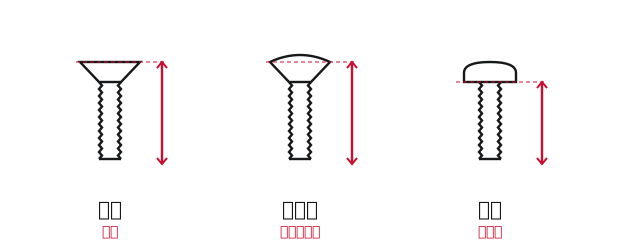
| Head style | Datum | Why |
|---|---|---|
| Countersunk (flat) | Overall length | The head sits flush in the countersink, so it counts |
| Oval (raised countersunk) | Overall to the head diameter | The cone sinks, the dome stays proud; measure to where they meet |
| Pan / round | Under head | The head stays entirely on the surface |
| Button | Under head | Same |
| Hex / hex washer | Under head | Same |
| Socket head cap | Under head | Same |
Full explanation → Where the standards stop at this size → Tolerance stack-up and the screw →
Enquiries
Self-Tapping Screws come in a lot of combinations. Tell us the item, size, material, finish, annual usage and application, and we will come back on feasibility and lead time. A drawing or a sample is fastest — quoting against the real part saves a great deal of guessing.
Volume range M1.0 – M5.0, standard fasteners up to M16. Minimum order From 10,000 pcs, depending on the part.